Basement Apartment in Salt Lake City

Typical cost in Salt Lake City

  • Basement apartment, about 700-800 sq ft$50,000 – $100,000+
  • Larger suite, about 1,000 sq ft or more, with its own outside entrance$75,000 – $130,000+

Anyone who owns a house in Salt Lake City and wants a second dwelling in the lower level, for a relative or a long-term tenant, is describing what Utah calls an internal accessory dwelling unit. Salt Lake City Basement Finishing builds these as basement apartments; this page sets out what state law, the city’s ADU guide and the inspector each look at.

This page is for owners, not renters: we do not list rooms for rent. It covers one unit inside a single-family house, in Salt Lake City and in nearby South Salt Lake and Bountiful. Detached units and garage conversions are not part of our work, and neither is anything that would change a rental listing or a return.

Request a free quote
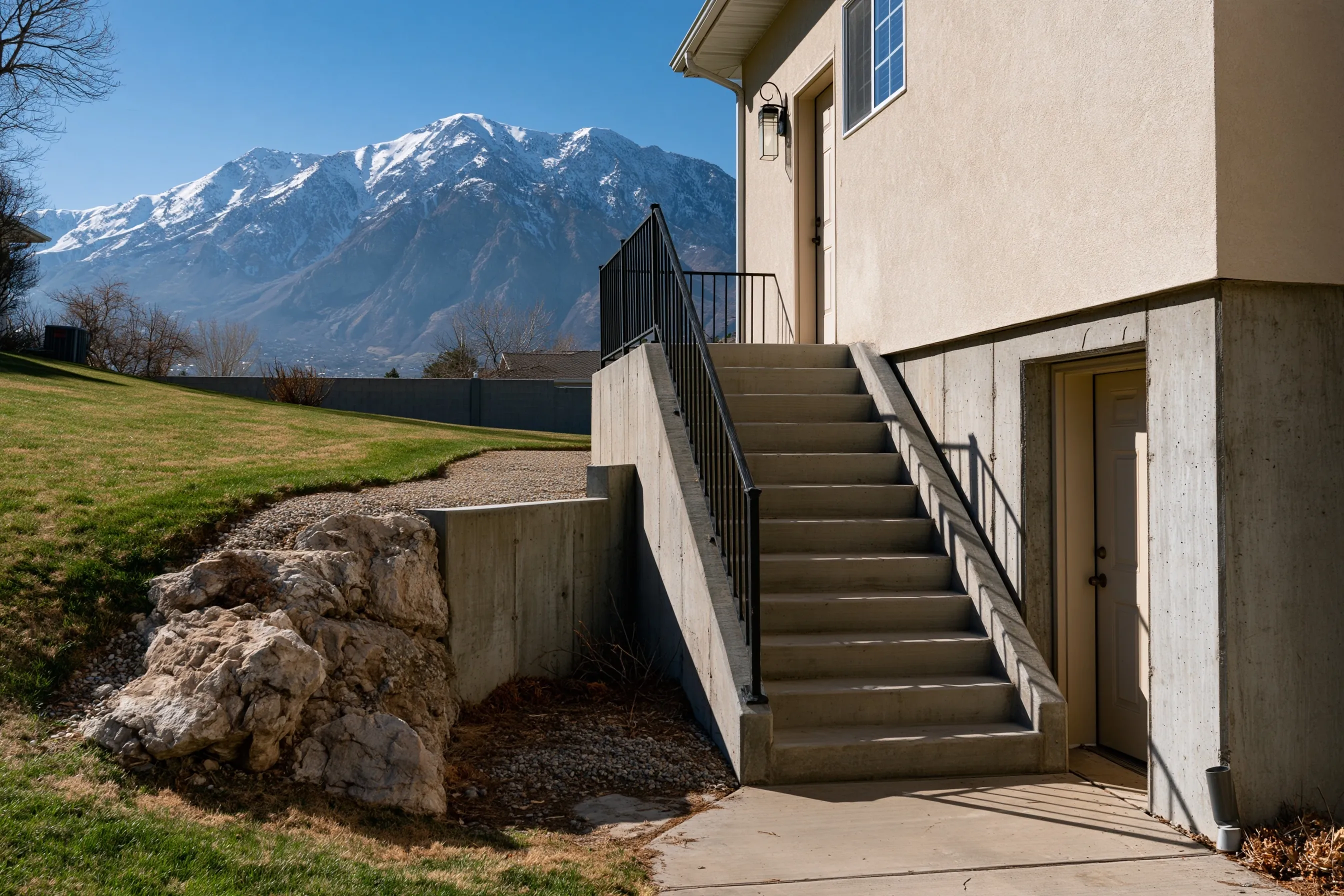
Side entrance to a lower-level unit of a stucco house, with a door at the foot of an exterior concrete stair with a black metal railing, a boulder retaining wall, a gravel path and the snow-capped Wasatch mountains behind

What goes into a basement apartment

A private entrance and escape opening

A new unit in an existing basement needs its own emergency escape and rescue opening. A separate exterior stair and door can serve as the entrance, though the escape opening is a separate requirement that the plans must show.

A kitchen or kitchenette

A basement apartment can include somewhere to cook, from a kitchenette to a full kitchen. Whether a second kitchen needs its own paperwork is a question for the city; one Utah city asks for a covenant when a kitchen is added.

Bedrooms and a bathroom

Each sleeping room needs its own escape opening, and a bathroom adds plumbing, ventilation and a lower ceiling allowance. The bedroom and bathroom pages cover each room in detail.

Basement apartment or internal ADU

Utah law makes an internal accessory dwelling unit a permitted use in areas zoned mainly for residential use. For one unit inside a primary dwelling, a city may not set limits on the unit’s size compared with the house, on lot size, on street frontage or on internal connectivity, apart from the exceptions the statute lists. The unit must meet all applicable building, health and fire codes.

A city may attach conditions of its own: a permit or license to rent the unit, a 30-day minimum stay, owner residence in the home, no separate utility meter, or no unit at all on a lot of 6,000 square feet or less. Salt Lake City’s version is in its guide, below.

Building items the inspector looks for

Utah’s code puts four demands on a new unit in an existing basement. First, an emergency escape and rescue opening. Second, smoke and carbon monoxide alarms in the places a new dwelling would have them. Third, a separating wall and floor that may use half-inch gypsum on both faces in place of the one-hour rating otherwise asked for between dwellings. Fourth, a carve-out: the occupant need not have access to the electrical disconnect that serves the other dwelling.

Fire-resistance-rated work can be inspected once the gypsum is up but before taping, so those walls stay unfinished until the inspector has seen them. Sound separation, heating separation and utility details were not researched; they are raised with the city when plans are drawn.

Salt Lake City ADU rules

The city’s planning guide, version 2.2 and undated, allows accessory dwelling units in residential-use zoning districts and lists a basement conversion as one configuration. It allows one ADU, sets no maximum size for an internal unit, and asks for one parking space in addition to the existing parking, a requirement it waives within a quarter mile of a transit stop or half a mile of a bike path. For a single-family dwelling it requires the owner or a family member to live in either the main building or the unit.

A building permit comes through the Citizen Access Portal, and the city’s Building Services page says a site review is required to obtain it. The guide itself tells readers that ADU rules can change and to check the website for the latest version. A 2023 article said the owner-occupancy rule would be reviewed in April 2026 and we found no outcome, so confirm the current rule with the city before you commit. If your building has two to four units, the guide’s single-family rules are not the whole picture and the city can say what applies.

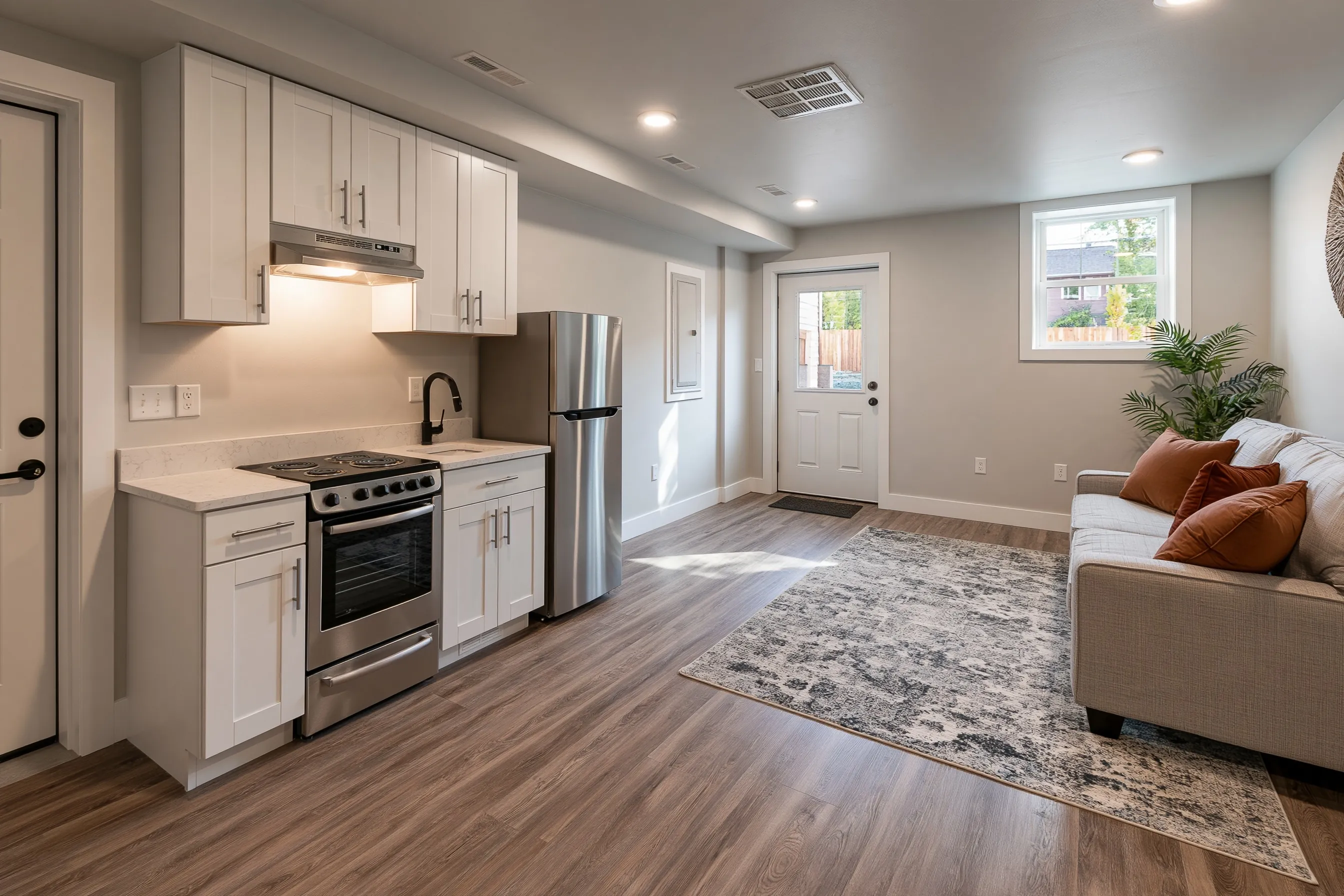
Basement apartment main room with a kitchenette along one wall, shaker cabinets, a small range and refrigerator, a loveseat and a separate exterior door with a glass panel

Questions and answers

Is a basement apartment allowed in Salt Lake City?

State law makes an internal accessory dwelling unit a permitted use in residential zones, and the city’s guide lists a basement conversion as a configuration. Zoning, owner occupancy, parking and the permit still apply, so check the current rules with the city.

Do I have to live in the house?

For a single-family dwelling, the city’s guide says the owner or a family member must live in the main building or the unit. A later review of that rule was planned for April 2026 and we found no result, so ask the city.

Does the apartment need its own egress window?

Yes. A new unit made in an existing basement must have an escape opening, and each bedroom inside it needs one too. Sizes are on the egress window page.

How much does a basement apartment cost?

The answer turns on floor area, bedrooms, bathrooms, kitchen, openings, entrance and finish level. A written estimate follows a visit and costs nothing.

Rooms inside a unit are handled on three other pages, basement bedrooms, basement bathrooms and egress windows, while the home page covers the whole range.

Request a free basement finishing quote

Tell us the address, whether the unit is for family or a long-term tenant, and how many bedrooms you want. If you know whether the lot is in a single-family zone or the building has two to four units, add it. We'll get back to you soon with an estimate or any questions we have. Estimates are free and there's no obligation.

Call (385) 386-4115

Call (385) 386-4115